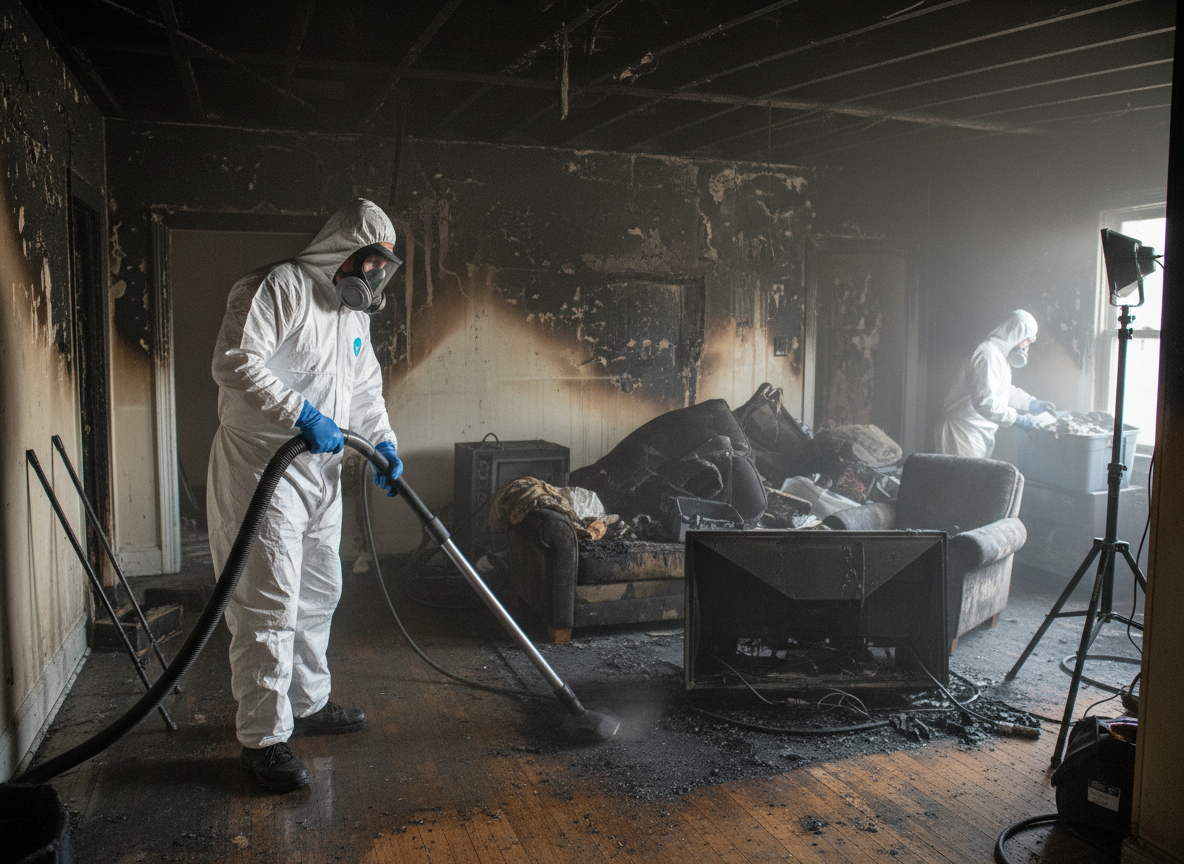
Tenant fire damage cleanup in Keene often involves older single-story homes with wood framing and limited insulation common throughout Kern County. Smoke travels through unsealed attic spaces and settles into drywall and carpet padding, requiring removal of affected materials rather than surface cleaning alone. Hot summer temperatures accelerate soot adhesion to surfaces, while cool winters increase moisture that can turn residue acidic and damage remaining contents. Technicians must coordinate with property owners and tenants to document losses separately for insurance claims.
In rental situations around Keene and Tehachapi, cleanup crews focus on odor neutralization using hydroxyl generators instead of ozone machines that can affect tenant belongings. Kitchens and living areas see the heaviest impact from cooking fires that spread through shared walls in multi-unit buildings. Proper disposal of charred debris follows local Kern County waste rules to avoid cross-contamination during transport. Final clearance testing confirms air quality before tenants return.
Edge cases include hidden char in crawl spaces under older Keene homes where dry soil and poor ventilation allow embers to smolder undetected. Restoration teams document every removed item with photos for both landlord and renter records. Work stops if structural concerns appear, requiring coordination with licensed contractors before proceeding with cleaning.
Technician insight
In Keene, the thing that catches most people out with tenant fire damage cleanup is how the Mediterranean climate's cool winters let acidic soot eat into the plaster and lathe of older Kern County rentals near Tehachapi, turning what looks like a quick wipe-down into full wall replacement once you open them up.
Kitchen fire in a Keene rental
A cooking fire spread smoke through a single-story rental near Woodford-Tehachapi Road. We found soot lodged behind kitchen cabinets and in the attic insulation common to these older homes. We removed affected drywall sections, cleaned remaining surfaces, and neutralized odors before the tenant moved back in.
How it works
- 1
Initial Assessment
Inspect the rental unit for visible char, smoke migration paths, and affected tenant belongings while noting any structural concerns.
- 2
Containment and Safety Setup
Isolate damaged rooms with plastic barriers and set up negative air to prevent soot spread to unaffected tenant spaces.
- 3
Soot and Debris Removal
Remove charred materials, vacuum surfaces with HEPA equipment, and clean hard surfaces using appropriate detergents.
- 4
Odor Neutralization and Final Clearance
Apply odor removal treatments and conduct air quality checks before releasing the unit back to the tenant.
Pricing
Pricing depends on square footage affected, depth of smoke penetration, and volume of tenant contents requiring cleaning.