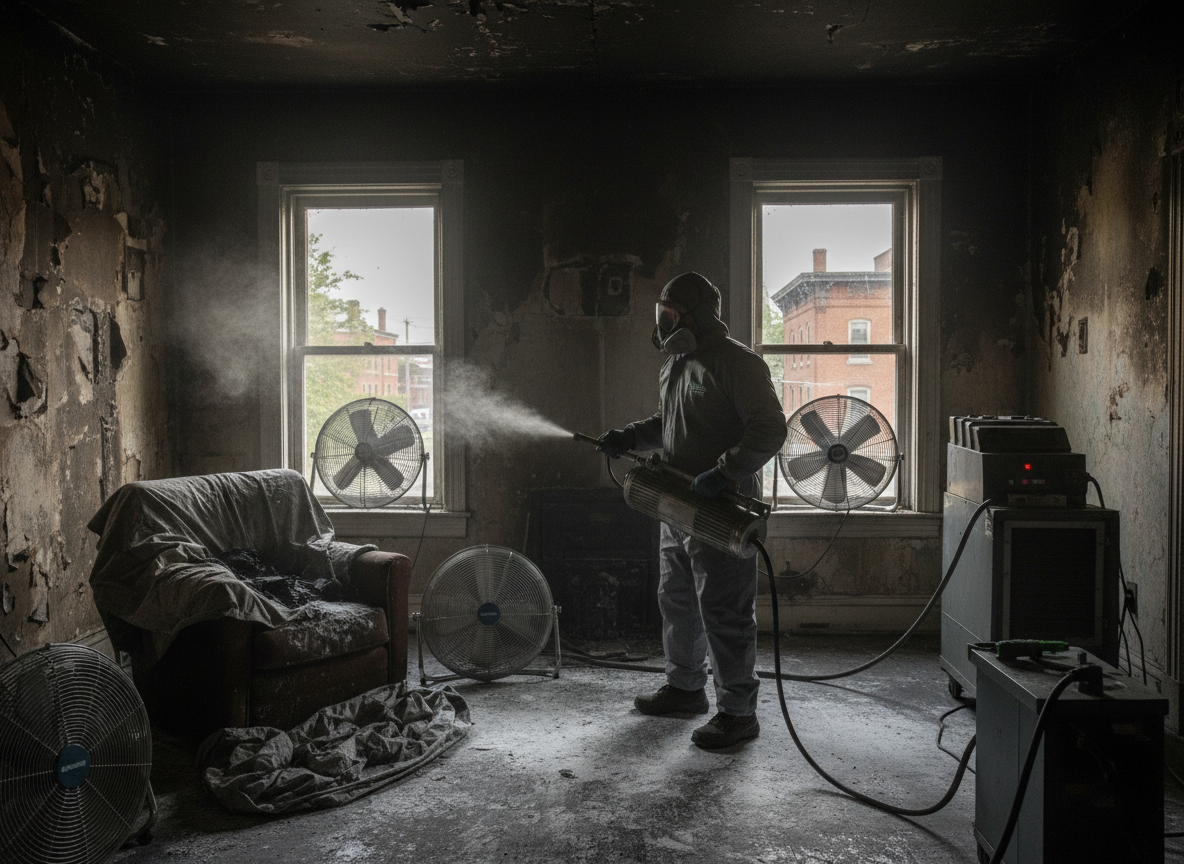
Smoke odors in Keene linger in older wood-frame homes along routes like Woodford-Tehachapi Rd because the Mediterranean climate brings hot summers that drive particles deep into drywall and insulation followed by cool winters that cause re-release. Standard cleaning fails when soot bonds to porous surfaces common in Kern County properties near Tehachapi. Technicians use thermal fogging and hydroxyl generators to break down molecules rather than mask them, preventing return when temperatures swing.
Edge cases arise after attic or crawlspace fires where smoke travels through HVAC ducts in single-story ranch homes typical of the area. Residue on metal ductwork and fiberglass insulation requires separate treatment to avoid recirculation. Homeowners often overlook concrete slab floors that absorb odors during winter moisture cycles, leading to repeated complaints if not addressed with penetrating sealers after neutralization.
Regulation notes for Kern County require proper disposal of contaminated porous materials before odor work begins to prevent secondary contamination. Technicians test air quality with VOC meters before and after treatment to confirm reduction below noticeable thresholds. Warning signs include persistent headaches or eye irritation that indicate incomplete removal rather than simple ventilation needs.
Seasonal patterns affect scheduling because summer heat accelerates off-gassing during treatment while winter humidity slows drying of treated surfaces. Jobs in Keene often combine odor work with selective material removal when smoke has reached subflooring in older builds, requiring coordination with local disposal sites to stay compliant.
Technician insight
In Keene, the thing that catches most people out with Odor removal after fire is how cool winter nights along the Tehachapi corridor pull trapped smoke out of the old plaster and lathe walls common on Woodford-Tehachapi Rd properties, making the smell return weeks later if only surface cleaning was done.
Kitchen Fire Odor in Keene Home
Smoke from a stovetop fire spread through a single-story home near Tehachapi. Inspection showed particles lodged in ceiling insulation and ductwork. Hydroxyl generators and targeted fogging were used over two days. Odors cleared and did not return during the following cool spell.
How it works
- 1
Initial Assessment
Inspect affected rooms, HVAC paths, and hidden cavities in Keene homes to map smoke migration.
- 2
Source Removal
Extract charred and heavily contaminated materials that continue releasing odors.
- 3
Neutralization Application
Apply thermal fog and gas-phase treatments to reach embedded particles in walls and ceilings.
- 4
Verification and Clearance
Test air samples and run final ventilation cycles to confirm odor elimination.
Pricing
Pricing varies by square footage affected, number of hidden cavities, and whether HVAC cleaning is required; upfront quotes given after inspection.