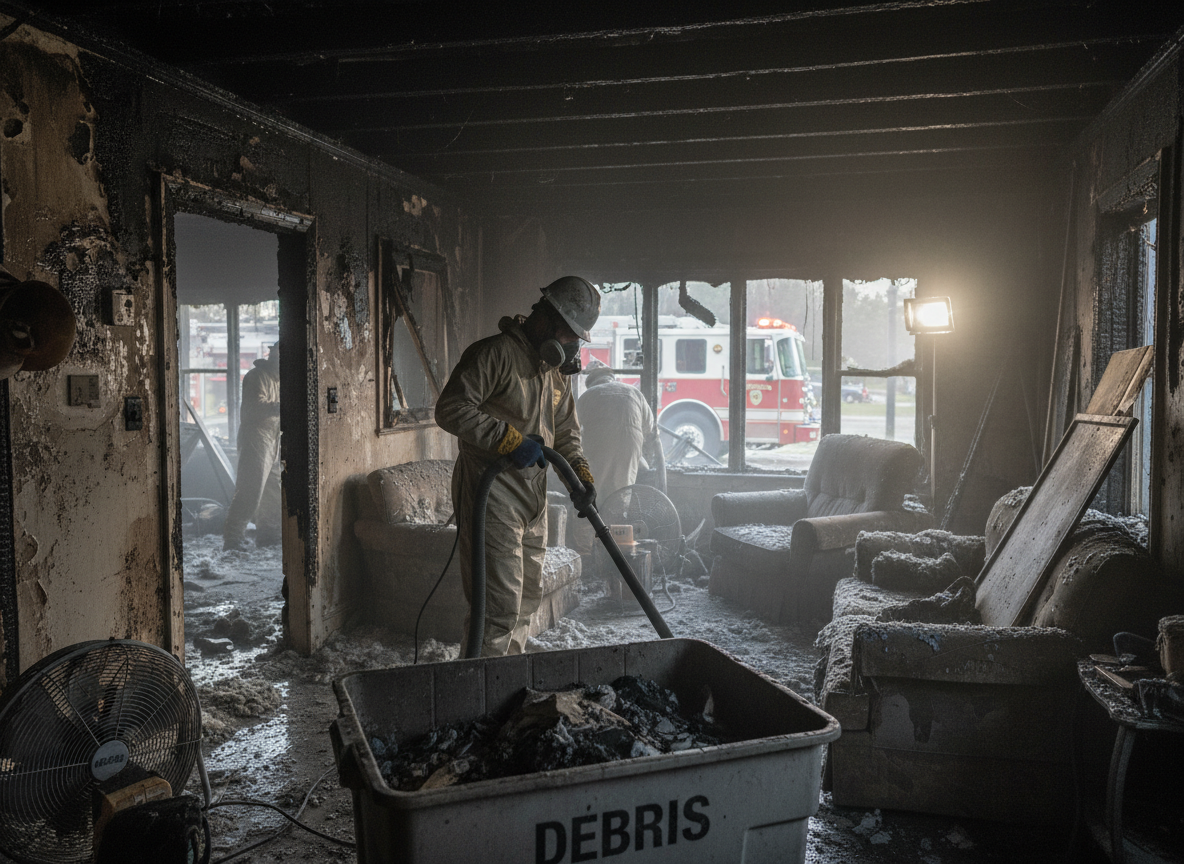
Keene sits in Kern County at the edge of the Tehachapi Mountains where Mediterranean summers bring low humidity and high fire risk. Smoke travels through older single-story ranch homes with unsealed attics and settles into insulation and ductwork that must be removed rather than cleaned. Winter temperature swings cause rapid cooling that can lock in odors if the structure is not dried within hours of suppression.
Local terrain includes steep driveways and gravel roads that slow equipment delivery after a fire. Residences often rely on well water and septic systems, so crews must manage water runoff from suppression to avoid contaminating soil or overwhelming tanks. Hot summer days accelerate corrosion on metal fixtures exposed to acidic smoke, requiring same-day neutralization to prevent further damage.
After initial assessment, technicians isolate unaffected rooms using plastic barriers and negative air machines to keep soot from spreading into living spaces. Contents are inventoried and moved to on-site storage before demolition of charred framing begins. Final clearance testing checks for hidden pockets of smoke residue in wall cavities common in 1970s-era builds around Woodford-Tehachapi Road.
Technician insight
In Keene the thing that catches most people out with emergency fire damage restoration is how quickly smoke penetrates the unsealed crawl spaces under older homes along Woodford-Tehachapi Road. Cool winter nights cause condensation that sets the odor into subfloor insulation before we arrive, and once that happens the only fix is full removal rather than cleaning.
Smoke Migration in a Keene Ranch Home
A kitchen fire spread soot through the attic of a 1970s home off Woodford-Tehachapi Road. We found residue inside HVAC ducts and insulation that had been missed during initial suppression. All affected materials were removed, the system was cleaned and dried, and the family returned without lingering odors.
How it works
- 1
Arrival and Safety Check
Technicians arrive within hours, shut off utilities, and evaluate structural stability before entering.
- 2
Soot and Debris Removal
Loose soot is vacuumed with HEPA equipment and charred materials are hauled away to prevent odor migration.
- 3
Drying and Odor Neutralization
Air movers and dehumidifiers dry the structure while ozone or hydroxyl generators treat embedded smoke smells.
- 4
Reconstruction and Final Walkthrough
Damaged drywall and flooring are replaced, then the homeowner inspects all restored areas before sign-off.
Pricing
Upfront written quotes after on-site inspection; final cost depends on square footage affected and extent of hidden smoke damage.