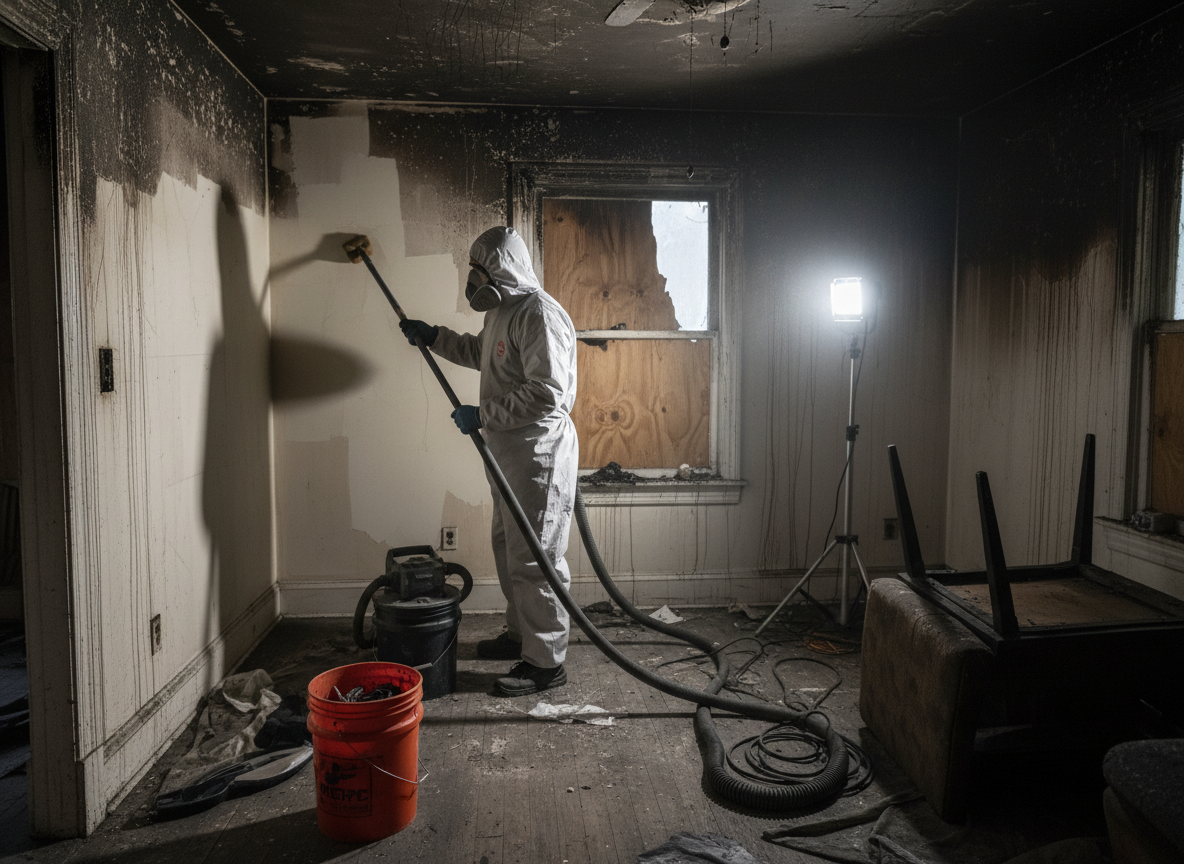
Smoke damage in Keene homes often involves fine soot that travels through HVAC systems and settles into porous materials like drywall and insulation, especially in older ranch-style houses common along Woodford-Tehachapi Rd. Hot summer temperatures accelerate chemical reactions in residues from burned plastics or wood, creating acidic compounds that etch surfaces if not neutralized quickly. Cool winter nights slow drying, allowing moisture to combine with soot and cause secondary staining on ceilings and walls.
Kern County properties near Tehachapi frequently see smoke migration from wildfires or structure fires into attics and crawl spaces due to the mountainous terrain and wind patterns. Restoration requires removing affected insulation and treating subflooring where smoke has wicked into joints, rather than surface cleaning alone. Mediterranean climate swings mean crews must account for rapid humidity changes that can re-activate odors weeks later if not fully extracted.
Technicians test pH levels on surfaces before applying sealers, as untreated alkaline soot from certain fuels can corrode copper wiring in pre-1980s homes prevalent in the area. Odor removal often involves hydroxyl generators run over several days because standard ozone treatments can damage rubber seals in older appliances common to Keene residences.
Clearing contents requires separating porous items like books and upholstery for off-site treatment, while non-porous goods are cleaned on location. Final verification uses air sampling to confirm particulate levels return to baseline before reoccupancy.
Technician insight
In Keene, the thing that catches most people out with smoke damage restoration is how the dry summer air lets soot travel deep into the loose-fill insulation of 1970s homes along the Woodford-Tehachapi corridor, then cool winter moisture reactivates odors that only show up after the job is supposedly finished.
Attic soot migration after nearby brush fire
Smoke entered through ridge vents into a Keene home's attic during a summer fire. Inspection revealed soot embedded in fiberglass batts and on roof sheathing. Crews removed insulation, cleaned rafters, and ran hydroxyl units for 72 hours to clear odors before reinstalling new insulation.
How it works
- 1
Initial Assessment
Inspect all affected rooms, HVAC, and hidden cavities for soot depth and odor sources using moisture meters and visual mapping.
- 2
Containment and Safety
Set up negative air machines and seal off unaffected areas to prevent cross-contamination during cleaning.
- 3
Soot Removal
Dry clean surfaces with specialized vacuums, then apply pH-neutral agents to dissolve residues from walls, ceilings, and contents.
- 4
Odor Neutralization
Deploy thermal fogging or hydroxyl equipment and treat HVAC ducts to eliminate embedded smoke smells.
- 5
Restoration and Verification
Repair or replace damaged materials, repaint with odor-blocking primers, and confirm air quality before returning the property.
Pricing
Costs depend on square footage affected, depth of soot penetration into insulation, and whether contents require off-site processing; upfront quotes provided after inspection.