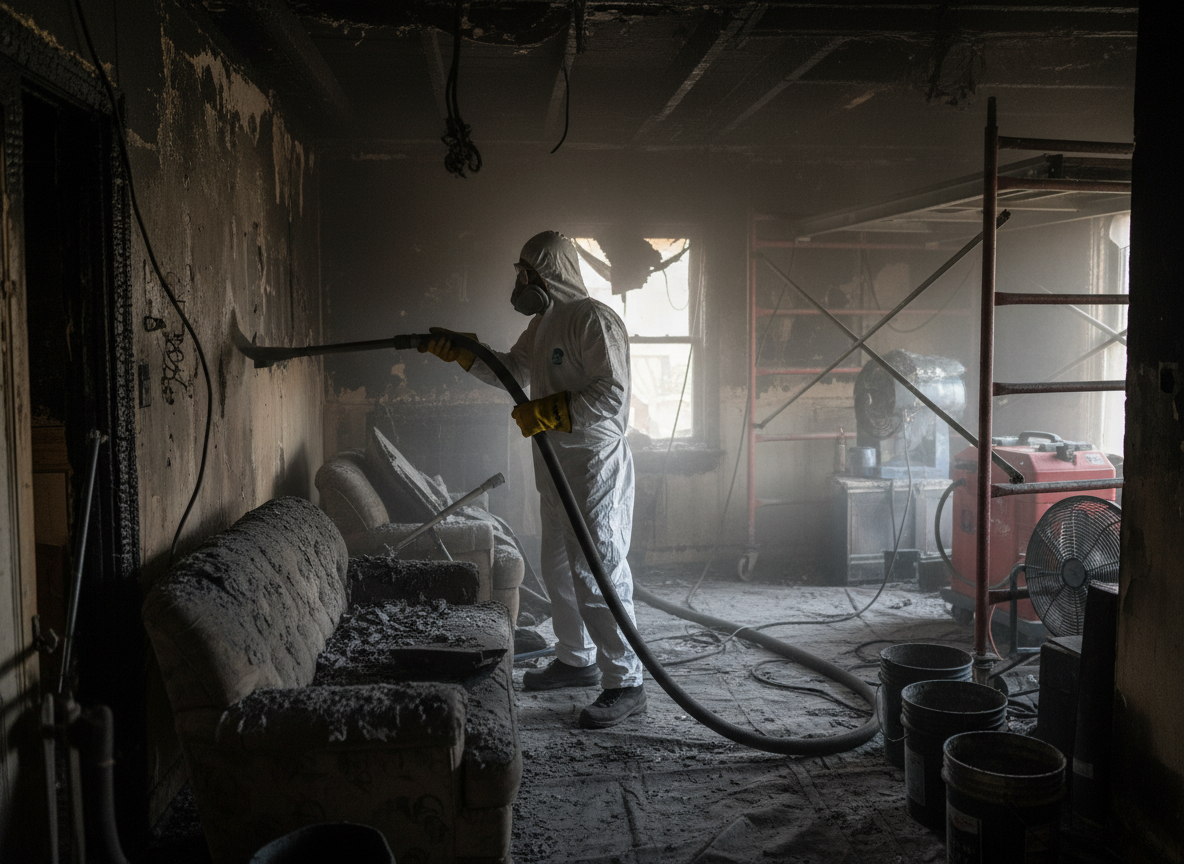
Fires in Keene often leave heavy soot and smoke residue that settles into the older wooden framing common in Kern County homes built decades ago. Hot summer temperatures accelerate drying, allowing particles to bond tightly with drywall and insulation, while cool winter nights can trap moisture that leads to secondary mold if not addressed quickly. Crews must test surfaces for pH levels before cleaning because alkaline soot from typical household fires reacts differently with local materials than acidic residues from vehicle or outbuilding fires near Tehachapi.
Edge cases arise when fires start in garages or utility areas common on Woodford-Tehachapi Road properties, where wiring from the 1970s and 1980s can hide behind walls and continue off-gassing after initial suppression. Removing contents requires separating porous items like carpets and upholstered furniture that absorb odors permanently in the dry Mediterranean climate. Air scrubbing equipment runs longer here than in coastal regions because low humidity keeps fine particles airborne longer, demanding multiple HEPA filtration passes before odor neutralization.
Code considerations in Kern County require documentation of removed materials when structural elements are compromised, especially in areas with sloped terrain that affects drainage and potential water intrusion during cleanup. Homeowners should avoid DIY attempts with household cleaners, as these can set stains into concrete slabs found in many Keene ranch-style homes. Professional teams use specialized agents matched to the fuel source of the fire, which varies between vegetation-driven wildfires and structure fires fueled by synthetics.
Technician insight
In Keene, the thing that catches most people out with Fire damage clean up is how the hot dry summers let soot sink deep into the unsealed wood framing of older Kern County homes, especially those near Tehachapi where wind carries fine ash farther than expected.
Garage Fire Residue in Keene Home
A fire originating in a detached garage spread smoke into the main house through shared ductwork. Inspection revealed alkaline soot embedded in attic insulation and on concrete floors typical of local builds. Crews removed affected materials, performed multiple HEPA passes, and treated odors before returning the home to the owner.
How it works
- 1
Initial Assessment
Technicians inspect the property for visible soot, hidden smoke damage in HVAC systems, and structural concerns while documenting conditions for insurance.
- 2
Safety Securing
Boarding up openings and setting up containment barriers prevents further contamination from wind-driven dust common along the Tehachapi corridor.
- 3
Soot and Debris Removal
HEPA vacuums and specialized sponges clear residues from surfaces, with contents inventoried and moved for off-site cleaning when needed.
- 4
Odor Neutralization
Thermal fogging and ozone treatments address embedded smoke smells that linger in older insulation and wood framing during dry summer months.
- 5
Final Clearance
Air quality testing and walkthrough confirm the space meets habitability standards before returning keys to the owner.
Pricing
Pricing depends on fire size, affected square footage, and whether contents require off-site processing; assessments are provided before work begins.