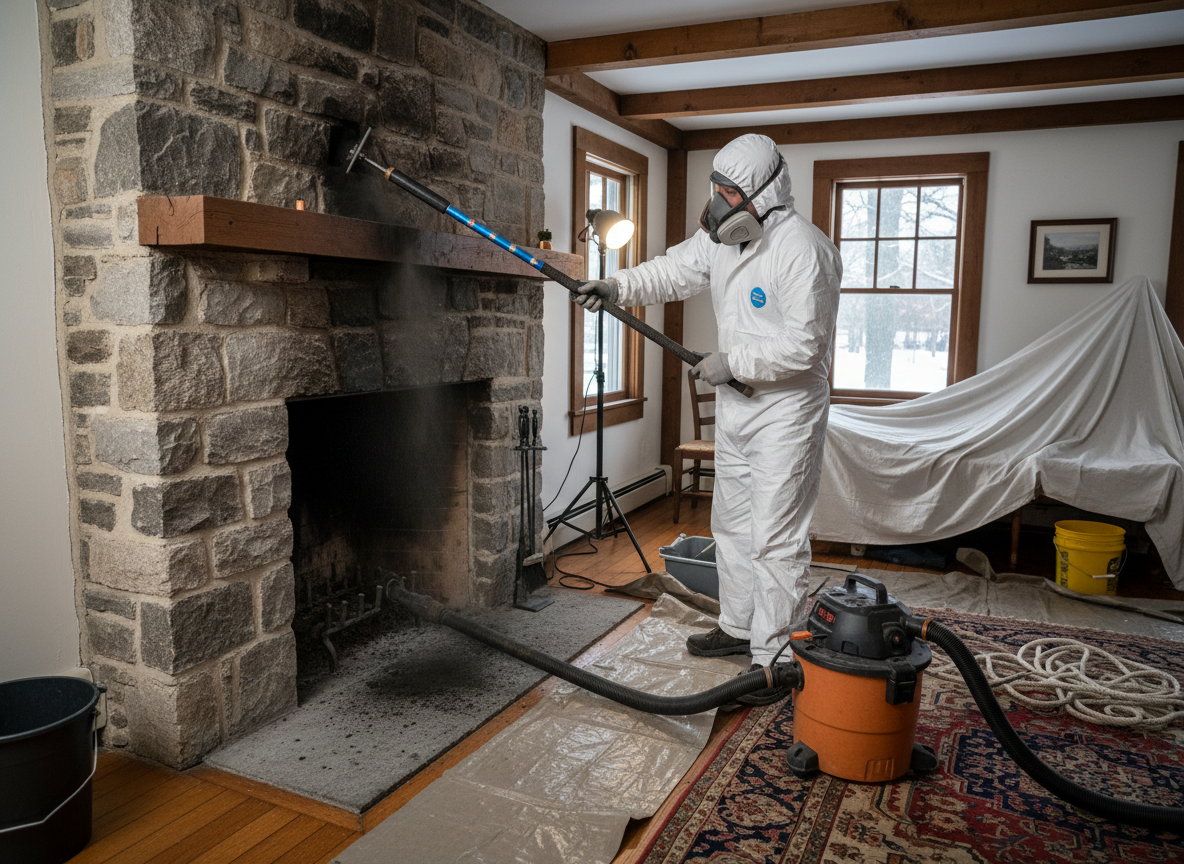
Soot from structure fires in Keene settles differently depending on the season. Hot summer days in Kern County drive fine particles deep into drywall seams and attic insulation while cool winter nights create condensation that binds soot to wood framing. Older homes along Woodford-Tehachapi Road often feature single-wall construction and unsealed crawl spaces that allow soot to migrate under floors. Technicians must test each surface before cleaning because alkaline soot can etch glass and discolor oak cabinets if left untreated for more than a few days.
Porous materials common in Tehachapi-adjacent properties require different approaches. Brick fireplaces and textured ceilings hold soot in microscopic pores that standard HEPA vacuums miss. In these cases, technicians apply pH-neutral sponges followed by dry-ice blasting on non-porous surfaces only. HVAC systems in Keene homes frequently pull soot into ductwork during the initial fire event, so registers and returns must be isolated before any forced-air cleaning begins to prevent redistribution.
Edge cases arise after electrical fires common in older Kern County wiring. Soot from burning PVC insulation leaves a sticky residue that requires solvent-based cleaners rather than water-based methods. Homeowners sometimes attempt DIY removal with household degreasers, which can drive the residue deeper into carpet padding and subflooring. Professional verification with moisture meters and black-light inspection confirms complete removal before any reconstruction work starts.
Technician insight
In Keene, the thing that catches most people out with soot removal is how cool winter nights pull moisture into the porous wood framing common in older Kern County homes near Tehachapi, locking soot into the grain so standard vacuuming fails and solvent steps become necessary.
Kitchen Soot After Electrical Fire
An electrical short in a Keene home sent soot through the kitchen and into the adjacent hallway. Inspection showed residue on oak cabinets and inside the return duct. Technicians isolated the HVAC, used dry sponges on the cabinets, and cleaned the ductwork before restoring airflow.
How it works
- 1
Initial Assessment
Inspect all affected rooms, test surfaces for soot type and pH level, and document migration paths through HVAC and attic spaces.
- 2
Containment Setup
Seal doorways and HVAC returns with plastic sheeting to prevent soot spread during cleaning operations.
- 3
Surface Cleaning
Apply appropriate sponges, vacuums, or dry-ice methods to walls, ceilings, and contents while protecting finished floors.
- 4
HVAC and Hidden Areas
Clean ducts, registers, and crawl spaces where soot has traveled, followed by final air quality verification.
Pricing
Cost depends on square footage affected, soot penetration depth, and whether HVAC cleaning is required.