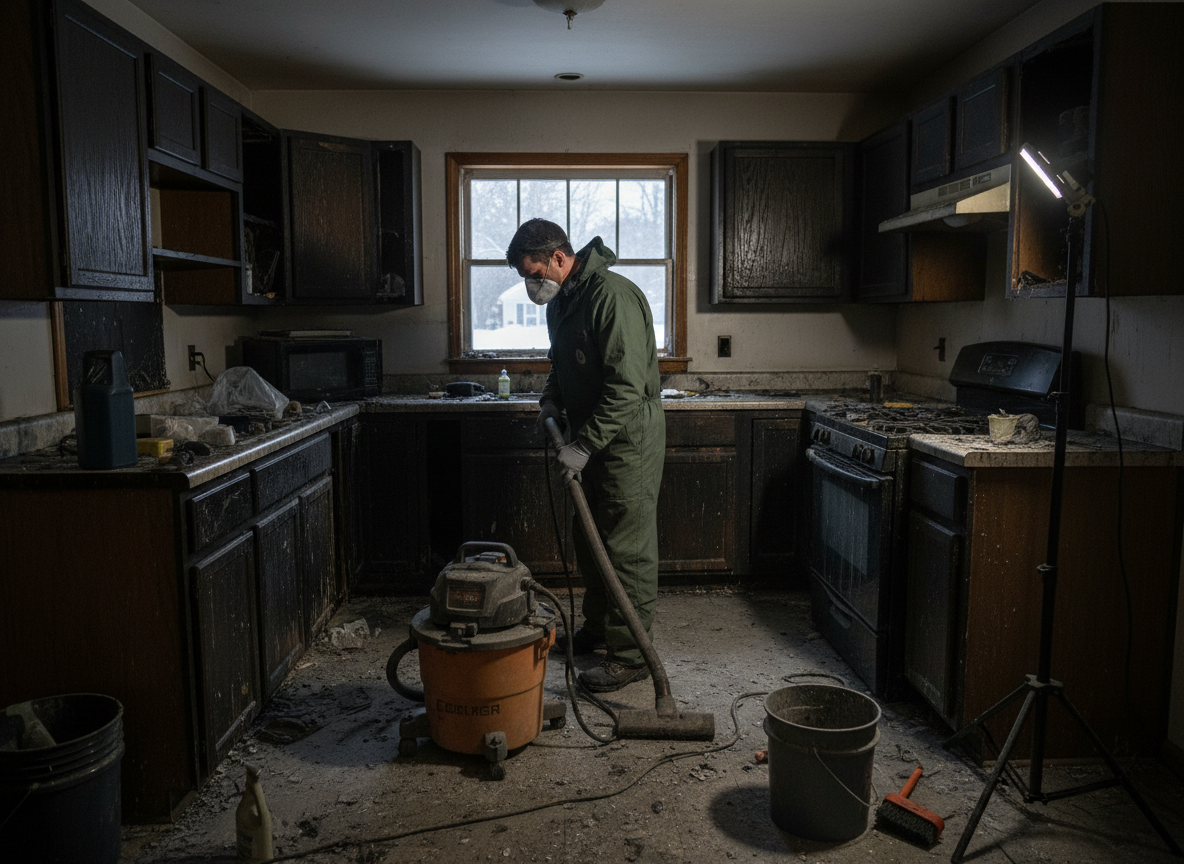
Kitchen fires in Keene often start from grease buildup on older electric ranges common in Kern County ranch houses built before 1990. Hot Mediterranean summers dry out wooden cabinets and particleboard, so flames move faster into walls and under countertops. Our crews begin by isolating the kitchen with negative air machines to keep smoke from reaching bedrooms and living areas that share the same HVAC runs found in many Tehachapi-adjacent properties.
Cool winter nights bring temperature swings that pull smoke deeper into drywall seams and attic insulation. We test surfaces with chemical indicators to locate hidden residue on tile, laminate and the textured ceilings typical of 1970s homes here. After removing charred cabinetry we treat remaining wood framing with enzyme-based deodorizers before sealing to prevent re-odor when the first Santa Ana winds return.
Electrical wiring damaged by heat must be inspected to current Kern County codes before new appliances are installed. We coordinate with local electricians when aluminum branch wiring from the 1960s is present, a frequent finding in Keene. Final clearance testing includes air sampling for VOCs that linger after grease fires, especially when the home has limited attic ventilation.
Technician insight
In Keene the thing that catches most people out with kitchen fire cleanup is how the afternoon winds off the Tehachapi grade pull smoke straight into the single-wall construction found in many 1960s and 70s homes along Woodford-Tehachapi Road, so what looks like surface soot is often inside the studs.
Grease fire on range in older Keene ranch house
A cooking fire spread from the stove into the range hood and wall cavity. We found heavy soot migration through the shared attic space into two bedrooms. After isolating the kitchen and removing damaged drywall we treated the framing and reinstalled with fire-rated materials.
How it works
- 1
Secure and Assess
Board up openings, set containment, and document all affected surfaces and contents before any cleaning begins.
- 2
Remove Charred Materials
Cut out burned cabinetry, drywall and insulation while protecting adjacent rooms from soot redistribution.
- 3
Clean and Deodorize
Apply pH-specific cleaners to hard surfaces, then fog with odor neutralizers matched to grease smoke chemistry.
- 4
Restore and Test
Replace removed materials, repaint with stain-blocking primer, and verify air quality before turnover.
Pricing
Scope and hidden damage determine final cost; we provide a written itemized quote before work starts.