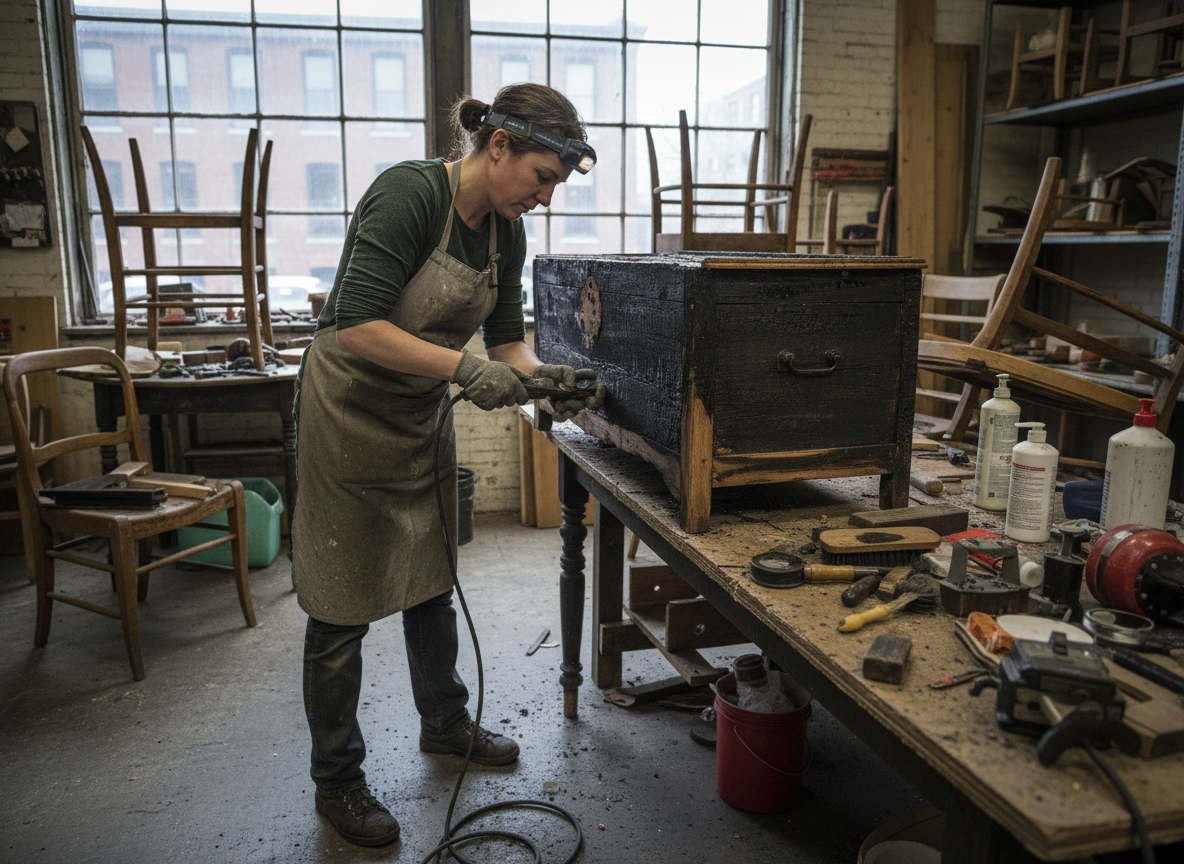
Furniture in Keene homes often includes older wooden pieces and upholstered items exposed to the area's Mediterranean climate. Hot, dry summers increase wildfire risk while cool winters bring higher indoor humidity that can set soot deeper into fabrics and wood grain. Restoration begins with careful assessment of smoke penetration, as Kern County properties near Tehachapi frequently use older construction with unsealed joints that allow odors to linger in drawers and frames.
Technicians evaluate each piece for char depth, delamination of veneers, and corrosion on metal hardware before deciding on cleaning, refinishing, or disassembly. In rural Kern County settings, dust from surrounding terrain mixes with soot, requiring multiple HEPA filtrations and specialized solvents that do not raise grain on aged oak or pine common in local housing stock. Edge cases include leather seating that shrinks after heat exposure and composite boards that swell irreversibly when water from suppression efforts remains trapped.
Homeowners should avoid moving pieces before inspection because shifting can spread embedded particles into carpets and flooring. Work follows standard safety practices for handling potentially hazardous residues without any licensing claims beyond basic operational standards. Final odor neutralization uses time-controlled filtration suited to the cool winter air that slows evaporation rates in Keene.
Technician insight
In Keene, the thing that catches most people out with fire-damaged furniture restoration is how the cool winter air slows drying and lets soot sink deeper into unsealed joints of older wooden pieces common in Kern County homes near Tehachapi.
Smoke-Damaged Dining Set After Summer Fire
A Keene homeowner called after a nearby brush fire sent smoke into an older house. We found heavy soot inside chair frames and table leaves where dust from local terrain had mixed with residue. After disassembly, multi-stage cleaning, and extended filtration suited to cool winter conditions, the set returned without odors.
How it works
- 1
Initial Assessment
Inspect each item on-site for smoke residue depth, structural integrity, and secondary water damage from suppression efforts.
- 2
Containment and Transport
Secure pieces in sealed barriers and move to controlled workspace to prevent cross-contamination within the Keene property.
- 3
Cleaning and Residue Removal
Apply targeted cleaning methods for soot, char, and mixed dust typical of Kern County terrain while protecting original finishes.
- 4
Restoration and Neutralization
Refinish surfaces, replace damaged hardware where needed, and run extended air filtration to remove embedded odors.
- 5
Return and Final Check
Deliver restored furniture and verify no residual smells remain under local seasonal humidity conditions.
Pricing
Cost depends on number of pieces, material types, and severity of smoke or char damage; contact for assessment.