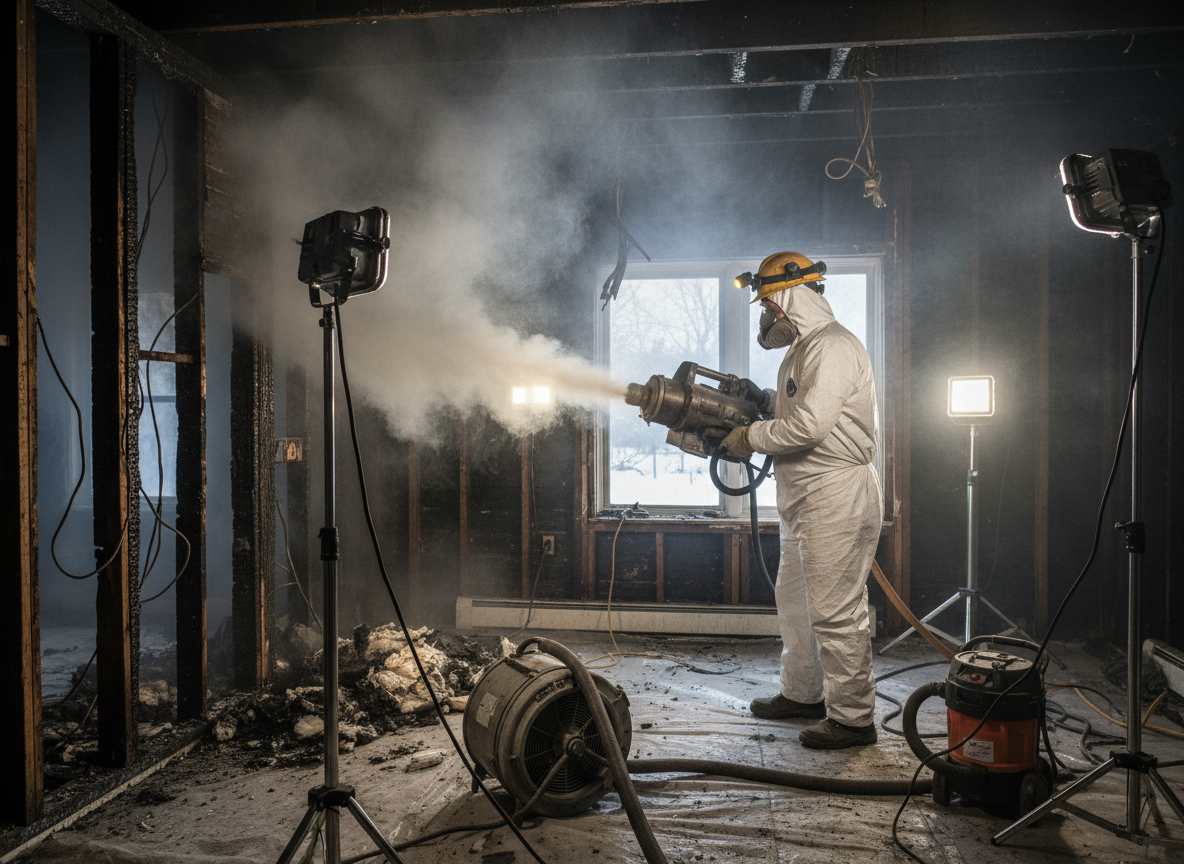
Keene sits in Kern County with a Mediterranean climate of hot dry summers and cool winters that directly affects fire and smoke jobs. Summer heat and wind patterns from the Tehachapi direction can push smoke deep into attics and wall cavities of the older single-story ranch homes common here. Winter cooling slows evaporation so moisture from suppression water lingers longer and raises the risk of secondary mold if drying is not aggressive. Crews working from the Woodford-Tehachapi Road base know to pull insulation early and run dehumidifiers longer than urban crews might expect.
Smoke from typical kitchen or electrical fires in these homes often carries resins from surrounding brush that stain porous materials like pine cabinetry and textured ceilings found throughout Keene. Standard ozone treatments alone rarely reach the residue lodged in HVAC ducts that run through unconditioned crawl spaces. Technicians test surfaces with pH strips before sealing because alkaline smoke residues left behind cause new paint to fail within months. Every job includes clearing the ductwork and replacing affected registers rather than simply cleaning visible surfaces.
Terrain around Keene means longer drive times from the shop to remote properties, so initial response focuses on boarding openings and setting up negative air before full equipment arrives. Older homes with knob-and-tube wiring require extra care when removing charred sections to avoid disturbing live circuits still in use. Final clearance always includes a third-party air quality check because Kern County building departments expect documentation before occupancy is restored.
Technician insight
In Keene, the thing that catches most people out with fire and smoke damage restoration is how summer winds push fine ash into the unsealed crawl spaces under the older homes that line the roads toward Tehachapi; once that ash mixes with winter moisture it sets hard and forces extra demolition that homeowners never budgeted for.
Kitchen Fire Smoke in a Keene Home
A cooking fire sent smoke through the central HVAC of a single-story home in Keene. Inspection showed residue throughout the attic and ducts. Crews removed affected insulation, cleaned the ductwork, and ran extended drying before reinstalling new materials. The home passed air quality testing and was returned to full use.
How it works
- 1
Emergency Board-Up and Containment
Secure openings and set up negative pressure to stop smoke migration into unaffected rooms.
- 2
Detailed Inspection and Documentation
Map smoke paths through attics, walls, and HVAC systems common in Keene ranch homes.
- 3
Contents and Structural Cleaning
Remove residues from surfaces and fabrics using methods suited to dry summer smoke and winter moisture conditions.
- 4
Odor Neutralization and Drying
Run air scrubbers and dehumidifiers until readings meet clearance standards for Kern County homes.
- 5
Restoration and Final Clearance
Repair or replace damaged materials and verify air quality before returning the property to use.
Pricing
Upfront written estimates provided after inspection; final cost depends on square footage affected and materials involved.