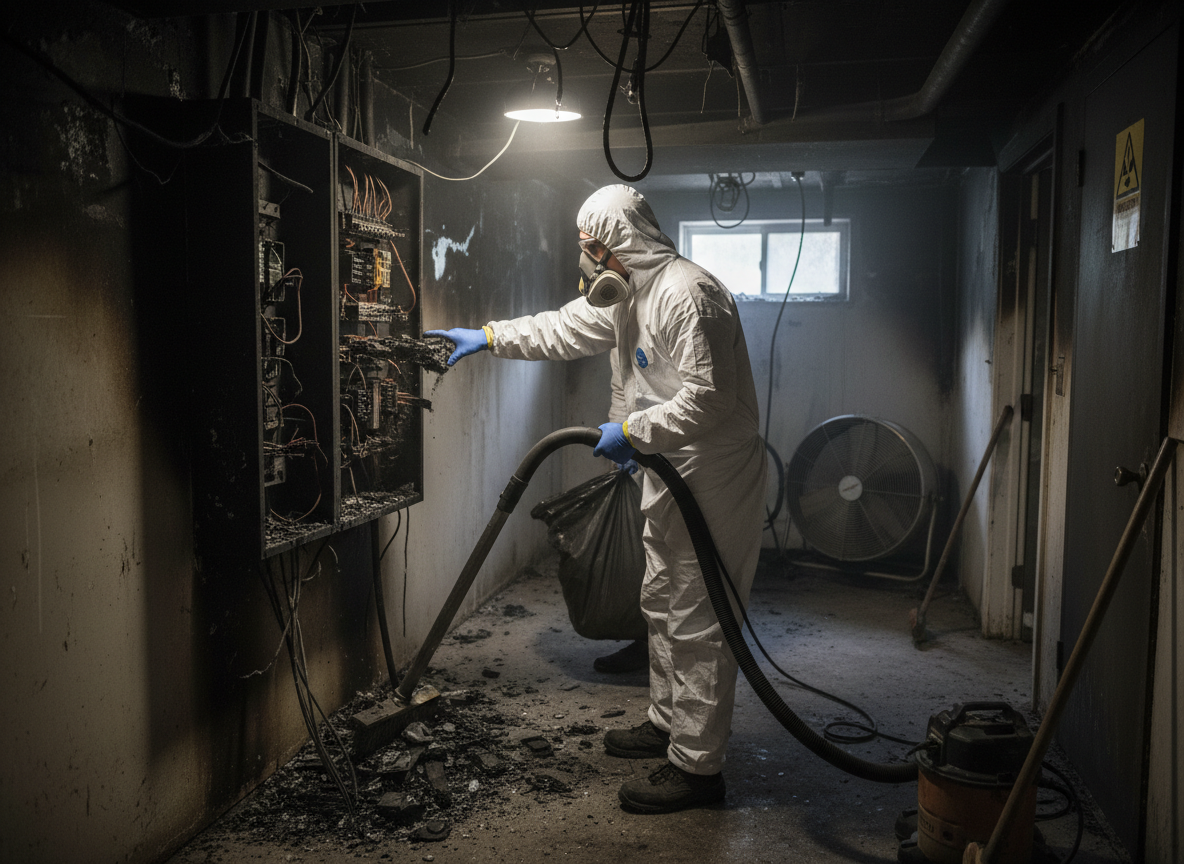
Electrical fires in Keene often start in homes built before the 1980s along Woodford-Tehachapi Road where knob-and-tube wiring still exists. Hot Mediterranean summers drive heavy air-conditioner use that overloads aging circuits and melts insulation inside walls. Soot from these fires carries conductive carbon that can re-ignite if not fully removed from junction boxes and attic rafters. Technicians must isolate live circuits before HEPA vacuuming and solvent wiping because residual moisture from cool winter nights can create new shorts.
Cleanup crews working near Tehachapi focus on hidden damage in crawl spaces where dry soil and low humidity let fine soot travel far from the origin point. They test outlets and switches with thermal cameras to locate melted conductors that standard visual checks miss. Removing charred insulation without disturbing sound sections prevents unnecessary demolition while meeting Kern County electrical code requirements for exposed wiring. Homeowners who attempt DIY cleaning frequently spread soot into HVAC ducts that serve the entire house.
After the fire is out, crews document every outlet and appliance on a room-by-room log so insurance adjusters see the exact scope. In Keene’s rural setting, power restoration can take days, so battery-powered air scrubbers run continuously to keep airborne particles from settling into remaining furniture and clothing.
Technician insight
In Keene the thing that catches most people out with electrical fire cleanup is how quickly soot travels through knob-and-tube wiring runs in homes built before 1970; one overloaded AC circuit on a 105-degree summer day can push carbon into every outlet on the same leg, and winter moisture then turns that carbon into a new short.
Overloaded AC Circuit in Pre-1980 Home
A homeowner on Woodford-Tehachapi Road lost power after an attic outlet sparked during a heat wave. Inspection showed melted insulation running 40 feet along rafters. Crews isolated the line, vacuumed and solvent-cleaned the soot from studs and boxes, then replaced only the damaged sections. The rest of the wiring passed re-test and the family moved back in after three days.
How it works
- 1
Secure Power and Assess Wiring
Shut off affected circuits at the panel and use thermal imaging to map melted conductors before any cleaning begins.
- 2
Contain and Extract Soot
Set up negative air machines and HEPA vacuums to remove loose carbon from walls, ceilings, and attic spaces without spreading it further.
- 3
Clean and Neutralize Surfaces
Apply pH-neutral solvents to insulation, studs, and electrical boxes, then rinse and dry to eliminate corrosive residues.
- 4
Test and Document Repairs
Re-test circuits, photograph every cleaned component, and prepare a report for the homeowner and insurance carrier.
Pricing
Cost depends on the number of circuits involved, attic access, and whether drywall must be opened for hidden soot removal.