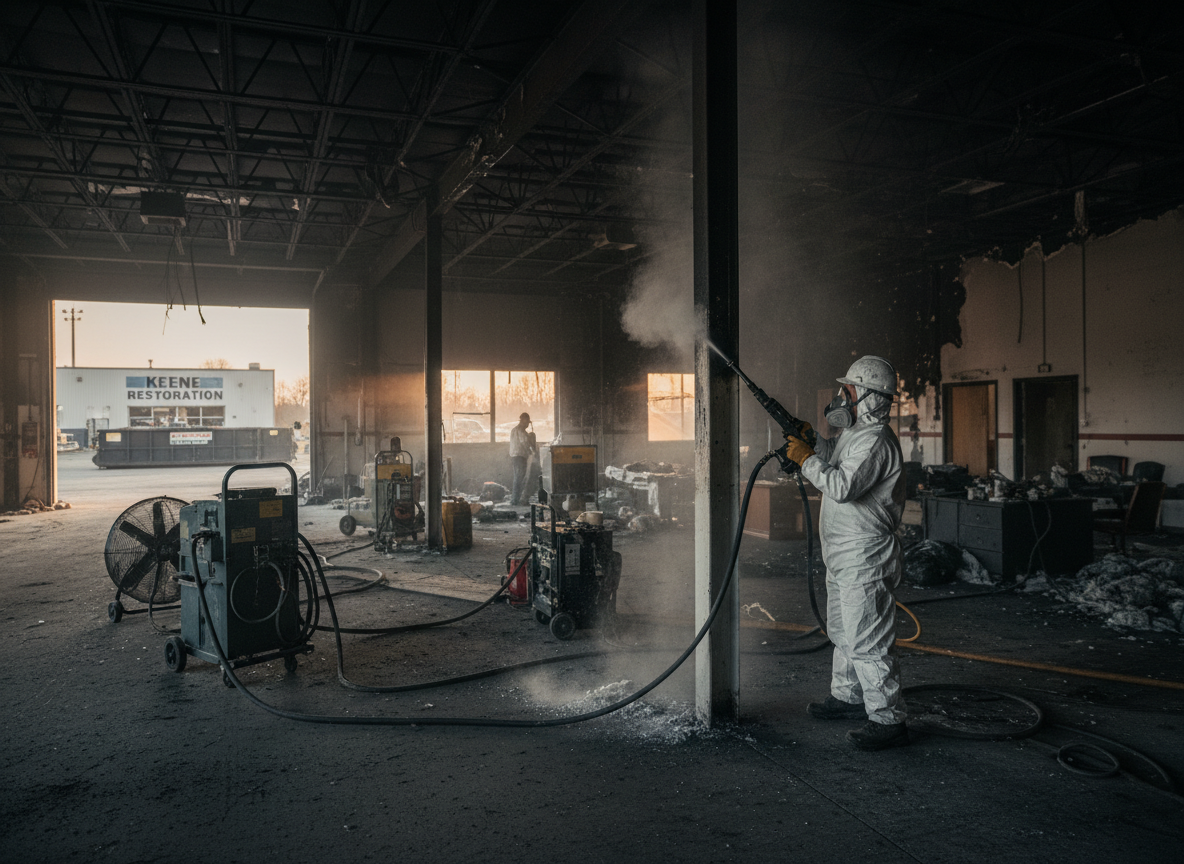
Commercial buildings in Keene often feature older masonry or wood-frame construction common to Kern County properties along routes like Woodford-Tehachapi Road. After a fire, residual smoke migrates through shared HVAC ducts and porous materials such as plaster and insulation, requiring targeted removal rather than simple surface cleaning. Hot summer temperatures accelerate off-gassing of charred contents while cool winter winds can push particulates deeper into wall cavities and ceiling plenums.
Restoration crews must account for the Mediterranean climate swings that affect drying times and chemical reactions during deodorization. In commercial settings near Tehachapi, electrical systems in buildings from the mid-20th century frequently contain outdated wiring that complicates safe power restoration after fire suppression. Edge cases include hidden ember pockets in attic insulation or under concrete slabs, which demand thermal imaging before final clearance.
Local regulations in Kern County require documentation of hazardous material handling when commercial fires involve stored chemicals or older finishes containing lead or asbestos. Workmanship is verified through staged inspections rather than blanket guarantees, allowing property owners to review each phase on site. Seasonal moisture variations in the region also influence whether porous materials can be salvaged or must be replaced to prevent secondary mold growth.
Technician insight
In Keene, the thing that catches most people out with Commercial fire restoration is how the cool winter winds funnel smoke through the open ceiling plenums of older commercial buildings along Woodford-Tehachapi Rd, making HVAC cleaning far more involved than the initial burn suggests.
Restaurant kitchen fire near Tehachapi
A commercial kitchen fire spread soot into dining and storage areas of a Keene business. Inspection revealed heavy contamination in the shared ductwork running through the attic. Crews isolated the system, performed staged cleaning, and verified clearance before reopening, restoring operations without extended closure.
How it works
- 1
Initial Assessment
Technicians arrive 24/7 at the Keene site and document structural compromise, smoke migration paths, and affected commercial systems before any work begins.
- 2
Containment and Safety
Barriers isolate damaged zones to prevent cross-contamination into unaffected tenant spaces while crews secure utilities and remove immediate hazards.
- 3
Cleaning and Deodorization
Specialized equipment extracts soot from HVAC, walls, and contents using methods suited to the area's dry summers and winter wind patterns.
- 4
Restoration and Verification
Repairs restore functionality, followed by final walkthroughs with the owner to confirm all commercial areas meet pre-loss condition.
Pricing
Upfront quotes based on inspection; scope and material conditions determine final cost.