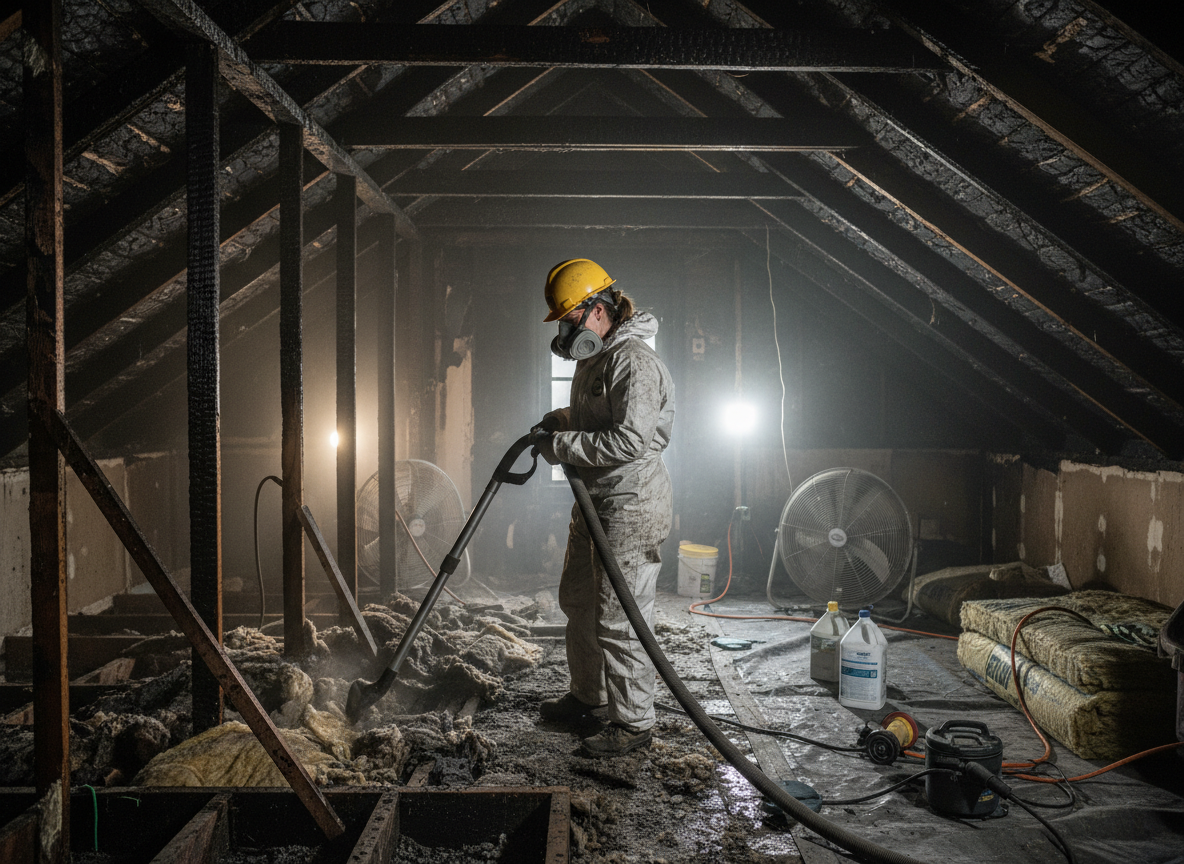
Attic fires in Keene often start from overloaded electrical panels in homes built before 1980 or from embers that travel through the Mediterranean climate's dry summer winds. Once flames reach the attic, they quickly compromise fiberglass batts, cellulose, and older knob-and-tube wiring that still exists on some Woodford-Tehachapi Road properties. Soot travels downward through ceiling penetrations and HVAC returns, leaving acid residues on drywall and framing that must be neutralized before any reconstruction begins.
Restoration crews working in Keene first isolate the attic from living spaces to stop cross-contamination, then use negative-air machines and HEPA filtration to capture fine particulates. Because winters bring cool, moist air that can reactivate hidden embers, technicians perform thermal imaging scans at multiple intervals rather than a single pass. Insulation removal is almost always required; attempting to clean through charred cellulose or rock wool leaves odor pockets that surface months later when temperatures swing.
Local building practices in Kern County mean many attics lack modern ridge venting, so smoke and heat linger longer and drive deeper into sheathing. After debris and charred material are removed, crews apply antimicrobial coatings to exposed rafters and install new baffles and insulation to current energy code before drywall repair. Homeowners along the Tehachapi corridor frequently discover that their insurance adjuster underestimates the volume of insulation that must be replaced once the full footprint of the attic is opened.
Technician insight
In Keene, the thing that catches most people out with attic fire restoration is how our hot, dry summers leave older rafters and insulation bone-dry, so embers can hide for days and reignite once cool winter air finally moves in from the Tehachapi pass.
Hidden ember in Keene attic
A homeowner near Woodford-Tehachapi Road called after a small kitchen fire sent smoke into the attic. We found smoldering cellulose behind a knee wall that had been missed by initial suppression. After full insulation removal, thermal re-scans, and new baffles, the home passed clearance with no recurring odor once winter temperatures dropped.
How it works
- 1
Initial Assessment
Technicians arrive from the 30356 Woodford-Tehachapi Rd location, perform thermal imaging, and document all affected rafters, wiring, and insulation.
- 2
Containment and Safety
Plastic barriers and negative pressure are established to keep soot from migrating into living areas while crews test for structural integrity.
- 3
Debris and Insulation Removal
Charred materials and contaminated insulation are extracted and disposed of following Kern County guidelines before any cleaning begins.
- 4
Cleaning and Odor Treatment
HEPA vacuuming, chemical neutralization, and air scrubbing remove soot and smoke residues from remaining wood and sheathing.
- 5
Restoration and Verification
New insulation and ventilation are installed, followed by final moisture and air-quality checks before the attic is returned to service.
Pricing
Pricing is determined after on-site inspection; scope depends on attic size, insulation type, and extent of hidden ember damage.