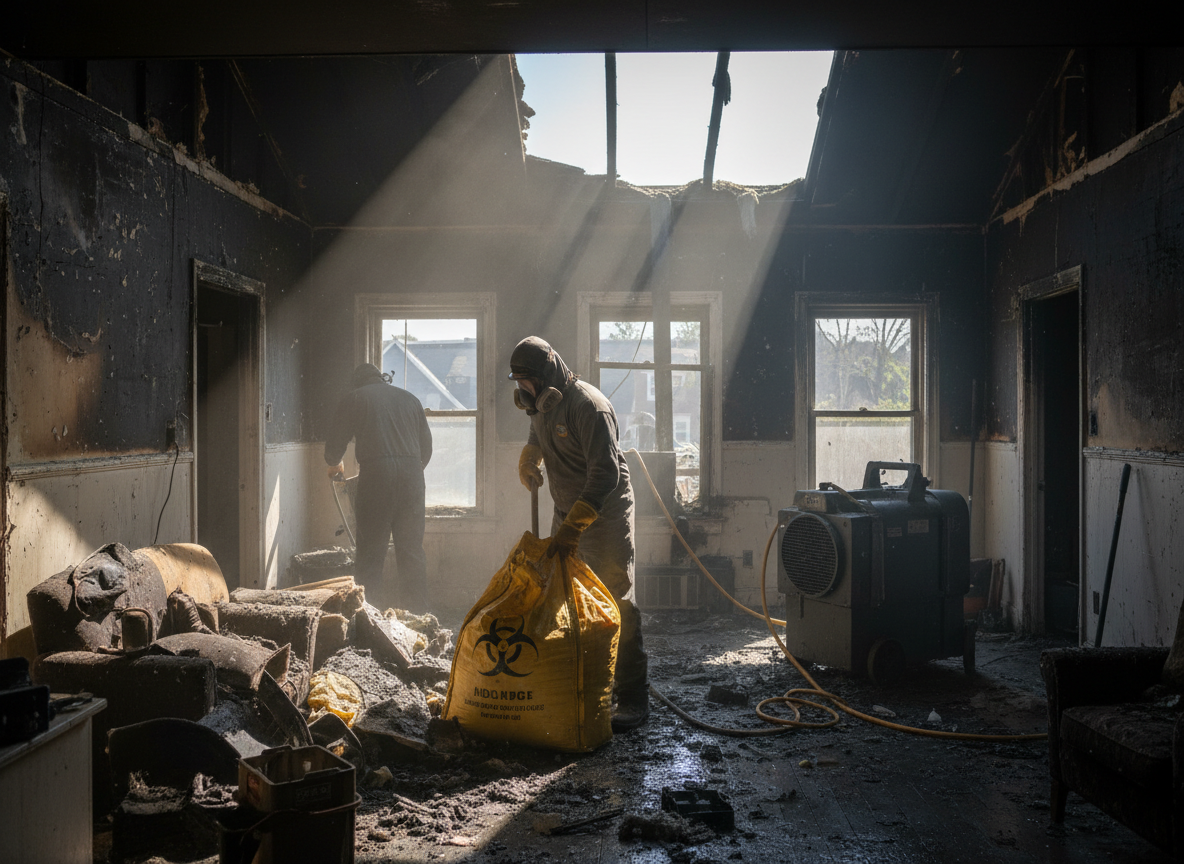
Apartment fires in Keene often involve older multi-unit structures common along routes near Tehachapi where shared HVAC systems allow smoke to travel between units. Mediterranean climate summers with high heat accelerate soot bonding to drywall and insulation while cool winters increase condensation that traps odors in porous materials. Technicians must map airflow paths through attics and crawlspaces typical of Kern County apartments to prevent recontamination after initial cleaning.
Edge cases include hidden residue behind baseboards and in electrical boxes where wiring from the 1970s and 1980s era housing stock can retain corrosive particles. In Keene the dry summer winds common in the area push fine soot deeper into carpet padding and cabinet interiors than in coastal regions. Proper containment using negative air machines is required to avoid affecting neighboring units during removal of charred framing and insulation.
Seasonal Considerations
Hot summer months in Kern County speed up oxidation of metal fixtures after a fire while cool winter evenings slow drying of cleaned surfaces. Apartment fire cleanup crews adjust dehumidifier placement and airflow based on these daily temperature swings to avoid warping wood trim common in local buildings.
Common Materials Encountered
Work frequently involves concrete block and stucco exteriors found in Keene apartments along with interior drywall that absorbs smoke odors rapidly. Technicians test for pH levels on surfaces before applying sealers because alkaline soot from typical household fires reacts differently on these substrates than on newer synthetic materials.
Technician insight
In Keene, the thing that catches most people out with Apartment fire cleanup is how the Tehachapi pass winds drive smoke into the older plaster and lath walls common in apartments off Woodford-Tehachapi Rd, requiring full cavity access that homeowners never expect.
Smoke Through Shared Vents
A kitchen fire in a Keene apartment sent soot through the central HVAC into three neighboring units. Inspection revealed residue throughout the ductwork and inside wall cavities. Crews isolated the system, cleaned all lines, and treated odors before restoring airflow.
How it works
- 1
Site Assessment
Inspect all affected units and shared spaces to trace smoke paths through vents and walls.
- 2
Containment Setup
Install barriers and negative air to protect unaffected apartments in the building.
- 3
Soot and Debris Removal
Clean surfaces and remove damaged materials using HEPA filtration suited to Kern County conditions.
- 4
Odor Neutralization
Apply thermal fogging or ozone treatments calibrated for the local cool winter humidity.
- 5
Final Clearance
Test air quality and surfaces before returning the unit to occupants.
Pricing
Costs depend on number of affected units, smoke penetration depth, and seasonal drying time required in Keene.