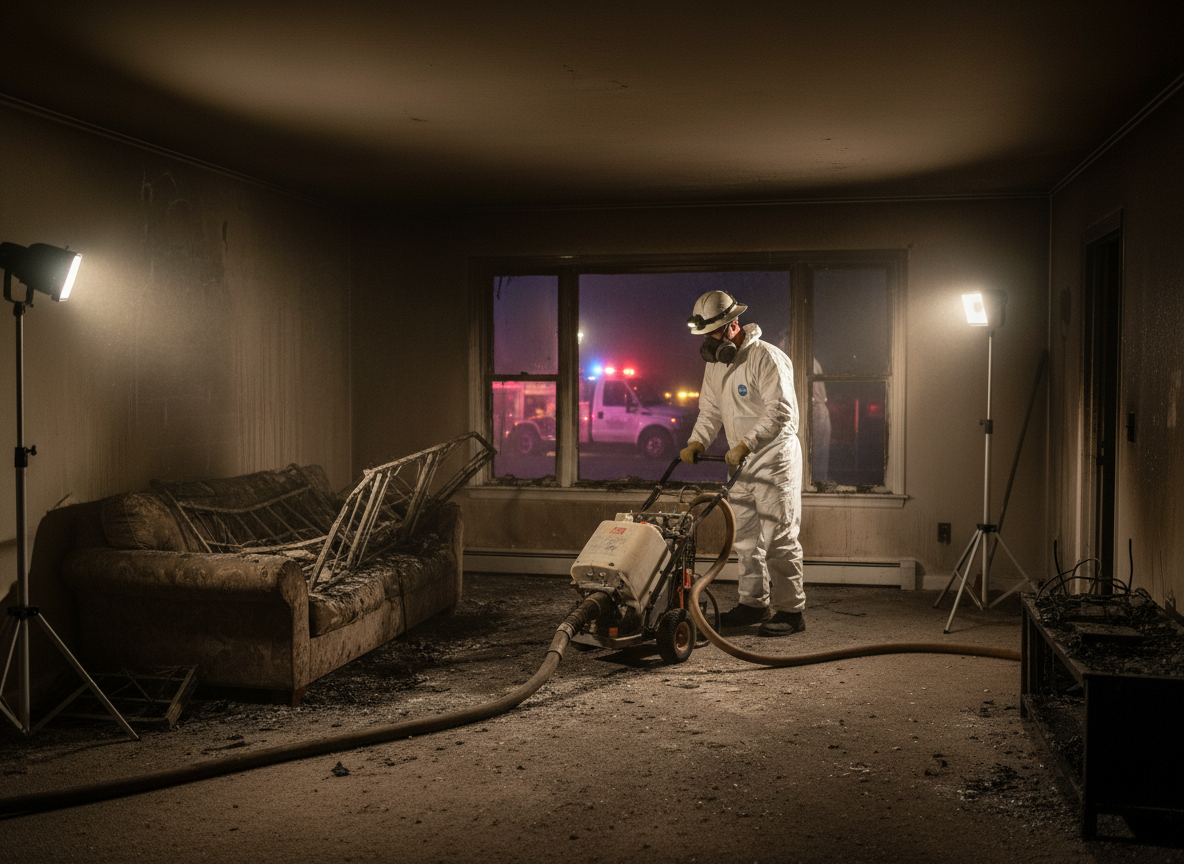
Keene sits in Kern County with a Mediterranean climate that brings hot, dry summers and occasional cool winters. These conditions dry out older wooden homes quickly, allowing smoke and soot to penetrate deep into attics, wall cavities, and crawl spaces. When a fire starts, the low humidity and occasional Tehachapi winds push particulates farther than in coastal regions, so standard surface cleaning rarely removes the odor or residue that later stains surfaces.
Many homes along Woodford-Tehachapi Road and surrounding rural parcels were built before modern fire codes, with balloon framing and minimal insulation. Charred studs can hide behind plaster or paneling, and hidden embers can reignite days later if not fully extinguished. Restoration crews must open walls selectively, use thermal imaging to locate heat pockets, and apply sealants rated for high temperatures before new drywall or paint goes on.
Cooler winter nights in the area increase condensation inside cooled structures, which can reactivate acidic soot and corrode metal wiring or HVAC components. Technicians therefore run dehumidifiers and air scrubbers longer than in drier seasons and test for pH levels on every surface before declaring a space clean. Skipping these steps often leads to recurring odors once heating systems cycle back on.
Residents near the Tehachapi pass also deal with wind-driven embers that travel across open terrain and land on shake roofs or under decks. A 24-hour response includes boarding openings immediately, removing charred debris before rain arrives, and coordinating with local waste facilities in Kern County that accept fire debris without extra permitting delays.
Technician insight
In Keene the thing that catches most people out with 24 hour fire restoration is how the dry Tehachapi winds push smoke into the balloon-framed attics of older homes along Woodford-Tehachapi Road. Homeowners often think wiping visible surfaces is enough, but the soot stays acidic and keeps eating at wiring and insulation until we open those cavities and treat them.
Attic ember re-ignition after initial knockdown
A homeowner in Keene reported a small kitchen fire that firefighters had extinguished. Two days later smoke appeared again from the roofline. We found an ember that had traveled through a chase into the dry attic insulation typical of pre-1980 homes here. After opening the ceiling, removing charred rafters, and treating the remaining framing, the odor did not return once the system was resealed.
How it works
- 1
Emergency Board-Up
Secure all openings and roof penetrations within hours of the call to prevent weather intrusion and unauthorized access.
- 2
Soot and Smoke Assessment
Use thermal cameras and air sampling to map smoke migration through older framing common in Keene homes.
- 3
Contents Removal and Cleaning
Pack out salvageable items for off-site cleaning while documenting everything for insurance purposes.
- 4
Structural Restoration
Remove damaged materials, treat remaining surfaces, and rebuild to current Kern County building standards.
- 5
Final Odor Elimination and Clearance
Run hydroxyl generators and conduct third-party air testing before returning the property to the owner.
Pricing
Upfront written estimates provided after on-site inspection; final cost depends on fire size, smoke migration, and materials affected.