2026-10-16 ·
How To Spot Hidden Smoke Damage In Keene Homes After Wildfires
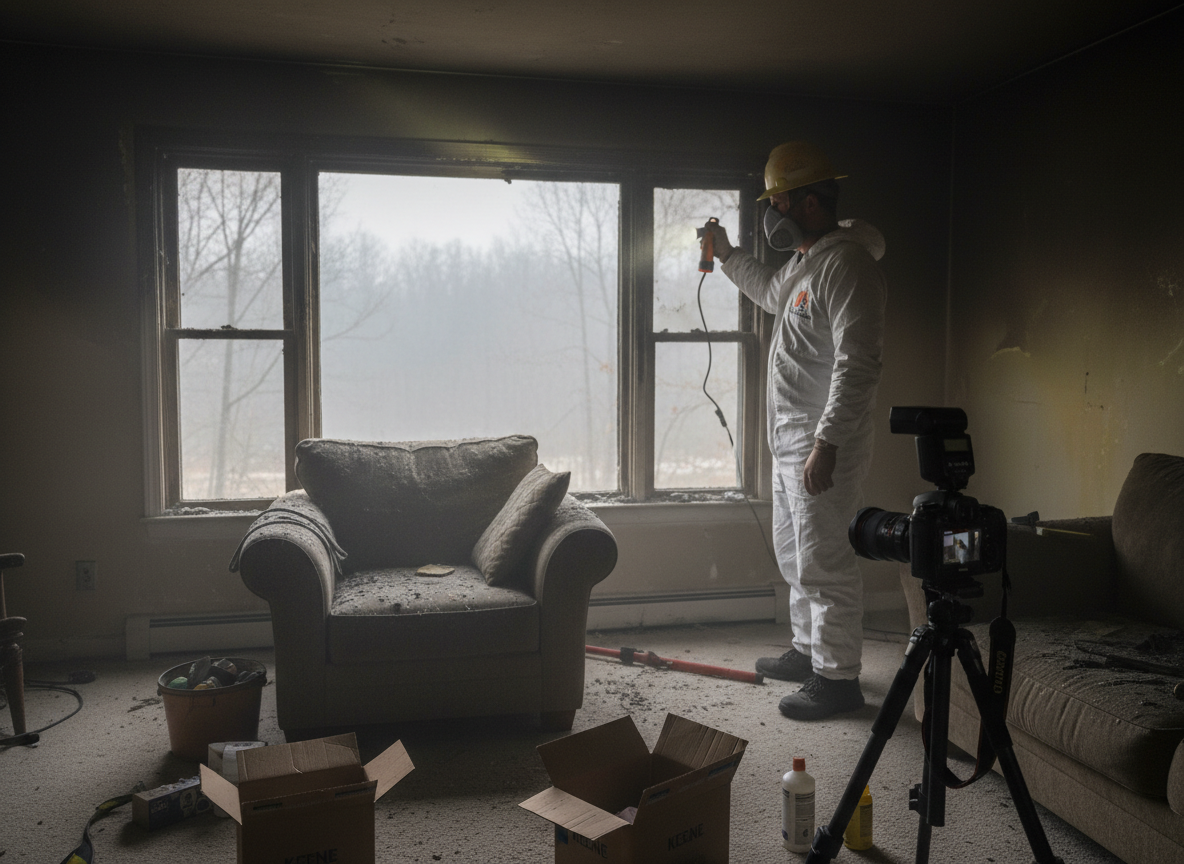
Hidden smoke damage in Keene homes after wildfires often appears first in attics, behind walls, and inside HVAC ducts where soot particles settle during the hot, dry winds common in Kern County summers. Residents near Tehachapi frequently notice faint odors or staining only after cool winter air forces systems to recirculate trapped particles.
Inspecting Attics and Insulation
Start by entering the attic with a strong flashlight and checking fiberglass batts or blown-in cellulose for gray or yellow discoloration along the top edges. In Keene homes built before 1980, older insulation absorbs smoke more readily because of larger gaps around roof vents exposed to wildfire embers carried from surrounding hills. Lift sections of insulation to examine rafters for a sticky film that feels tacky rather than dusty. Homeowners in the Woodford-Tehachapi corridor often find that cool winter nights condense moisture onto these surfaces, darkening stains that were invisible during summer heat. If discoloration extends more than 2 feet from any vent, deeper penetration has likely occurred.
Checking HVAC Systems and Ductwork
Turn off the furnace or AC and remove a supply vent cover to look inside the duct for black streaks or a fine powder that smears when touched. Smoke travels through return ducts during wildfires because Keene's Mediterranean climate creates strong pressure differentials when outdoor temperatures spike above 95 degrees. Run the system for 5 minutes after a wildfire event and smell each room for a campfire scent that returns after the unit cycles off. Filters that load with gray residue within 48 hours indicate particles have bypassed the media and settled in coils. Smoke remediation addresses these hidden paths before winter heating begins.
Examining Walls, Ceilings, and Hidden Corners
Shine a UV light along baseboards and behind appliances to reveal soot lines that ordinary bulbs miss. In Kern County homes, textured ceilings trap particles in the grooves, and the cool winter humidity makes them reappear as shadows weeks later. Pull back carpet edges near exterior walls to check for staining on the padding where smoke settled during low-wind periods after a fire. Test electrical outlets by removing the cover plate and looking for residue on the wires, a common issue in single-story Keene residences with older knob-and-tube wiring. Persistent odors near these spots signal the need for odor removal after fire rather than simple cleaning.
Seasonal Factors Specific to Keene Wildfires
Dry summer months followed by cool winters accelerate hidden damage because heat opens pores in wood and drywall while later moisture closes them around trapped soot. Homes near Tehachapi experience stronger Santa Ana winds that drive smoke deeper into crawl spaces than fires originating farther south. Seasonal Fire Risks For Homes Near Keene During Dry Summer Months outlines how these patterns affect local properties. Early detection avoids secondary issues when residents restart heating systems after the first frost.